
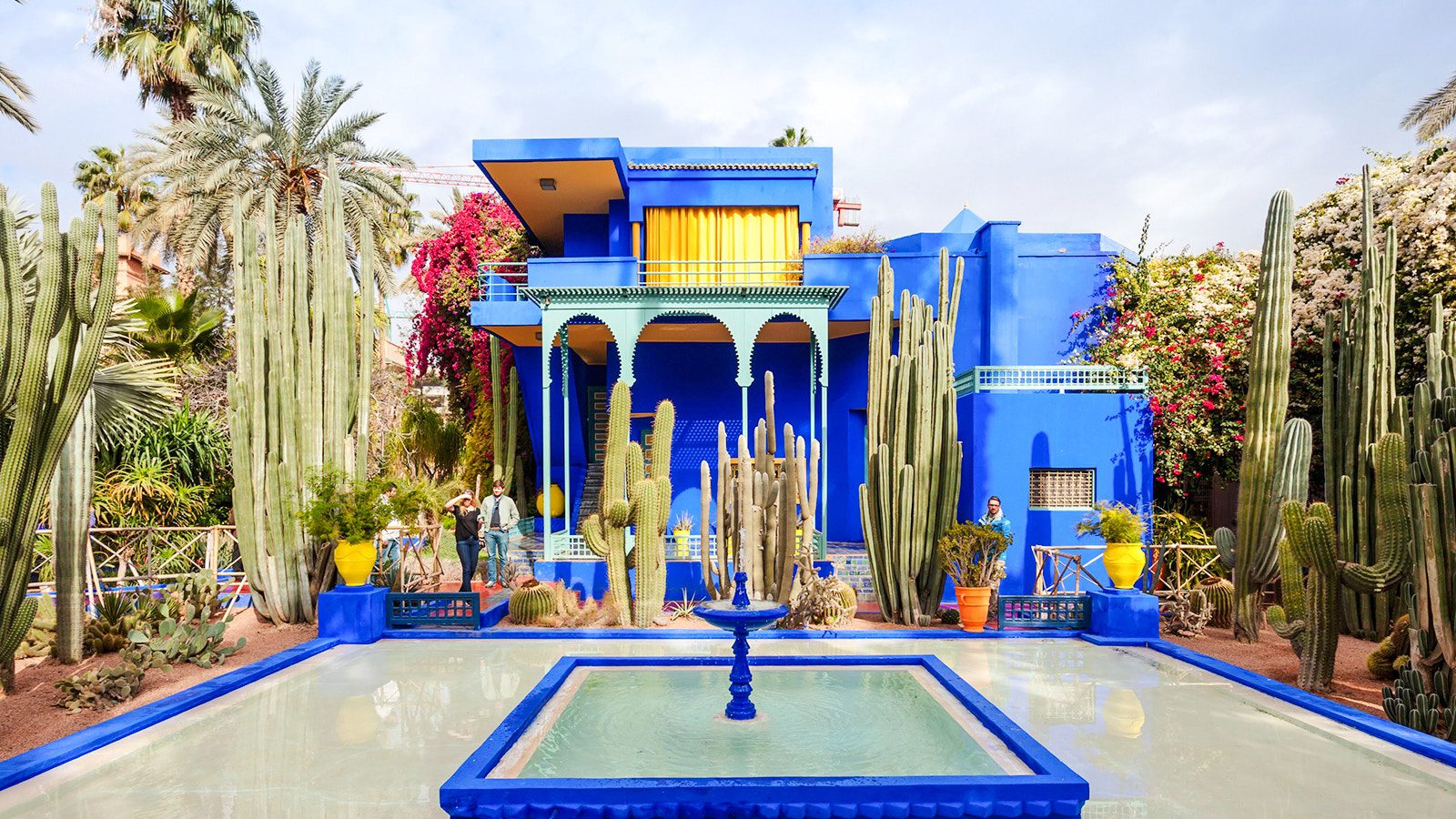
Jardin Majorelle is one of Marrakech’s most beloved landmarks: a botanical garden, an artist’s sanctuary, and a vivid piece of Moroccan design history. Its story begins with French painter Jacques Majorelle, who arrived in Morocco in the early twentieth century and became captivated by Marrakech’s light, architecture, and plant life.
The Vision of Jacques Majorelle
Majorelle began developing the garden in the 1920s around his studio and villa. Rather than creating a formal European garden, he built a living composition of color, shade, and texture. Bamboo groves, palms, bougainvillea, agaves, water features, and sculptural cacti were arranged like elements in a painting.
The famous cobalt tone now known as Majorelle Blue became the garden’s signature. Used on walls, pots, pergolas, and the Art Deco villa, the color creates a striking contrast with green foliage, yellow accents, and terracotta paths.
A Garden Saved by Yves Saint Laurent and Pierre Bergé
After Jacques Majorelle’s death, the property declined and risked being lost to redevelopment. In the 1980s, fashion designer Yves Saint Laurent and his partner Pierre Bergé purchased and restored Jardin Majorelle, preserving its botanical collection and artistic character for future generations.
Their restoration transformed the garden into a protected cultural landmark. Today, visitors can walk through the same serene paths, admire the blue villa, pause by lily ponds, and understand why the site became such an important place of inspiration.
Why Jardin Majorelle Matters Today
Jardin Majorelle represents the meeting point of art, architecture, Moroccan craft, and botanical preservation. The garden is home to hundreds of plant species and also houses the Pierre Bergé Museum of Berber Arts, where visitors can explore Morocco’s Amazigh heritage.
Planning a Meaningful Visit
Visit early in the morning or later in the afternoon when the light is softer and the paths are quieter. Allow enough time for the garden, the villa exterior, the ponds, the boutique, and the Berber Museum if your ticket includes it.