Jardin Majorelle is compact enough to visit in a relaxed morning or afternoon, yet rich enough to reward careful attention. The garden brings together botanical design, Moroccan heritage, Art Deco architecture, and peaceful water features in one of Marrakech’s most famous cultural spaces.
The Majorelle Blue Villa
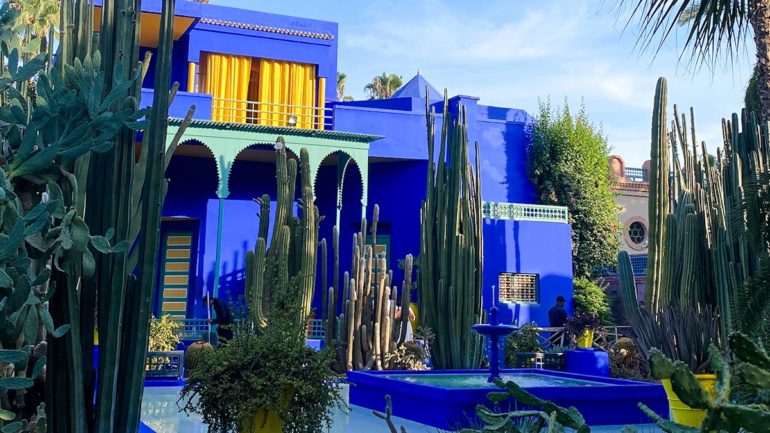
The blue villa is the garden’s most recognizable landmark. Originally connected to Jacques Majorelle’s studio, it is painted in the intense cobalt shade that made the site famous. Surrounded by palms and cacti, the building is a symbol of Marrakech’s artistic side.
The Pierre Bergé Museum of Berber Arts
Inside the villa complex, the Berber Museum presents Morocco’s Amazigh heritage through jewelry, textiles, traditional clothing, musical instruments, and ceremonial objects. It adds important cultural context to the garden.
Cacti, Bamboo, Palms, and Bougainvillea
The plant collection includes sculptural cacti, tall palms, bamboo tunnels, agaves, flowering bougainvillea, and plants gathered from different parts of the world. The planting is arranged to create shade, color contrast, and dramatic silhouettes.
Ponds and Water Features
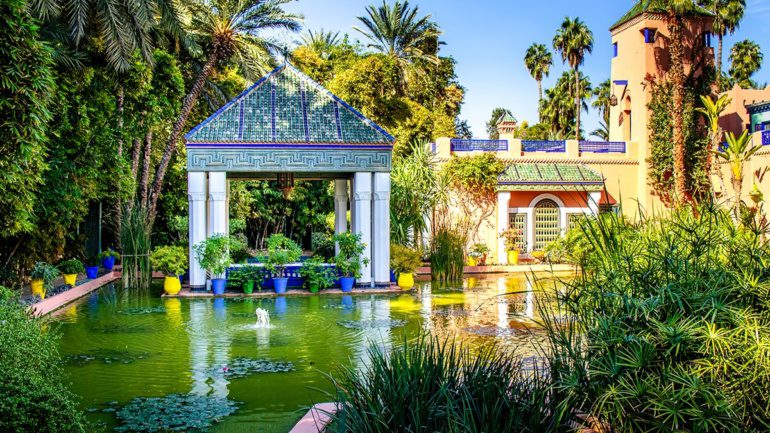
Water is part of the garden’s calm atmosphere. Lily ponds, fountains, and reflective pools cool the space and provide quiet places to pause after exploring Marrakech’s busier streets and souks.
Café Bousafsaf and the Boutique
Café Bousafsaf offers a shaded place for Moroccan mint tea, coffee, juice, or a light snack. Before leaving, the boutique is worth browsing for design-led souvenirs inspired by Moroccan patterns and botanical forms.
How Long Do You Need?
Most visitors should allow at least 90 minutes for the garden and more if they plan to visit the museum, take photographs, or stop at the café.